
Once Upon a Time There Was a Writer
Olga Kolari |


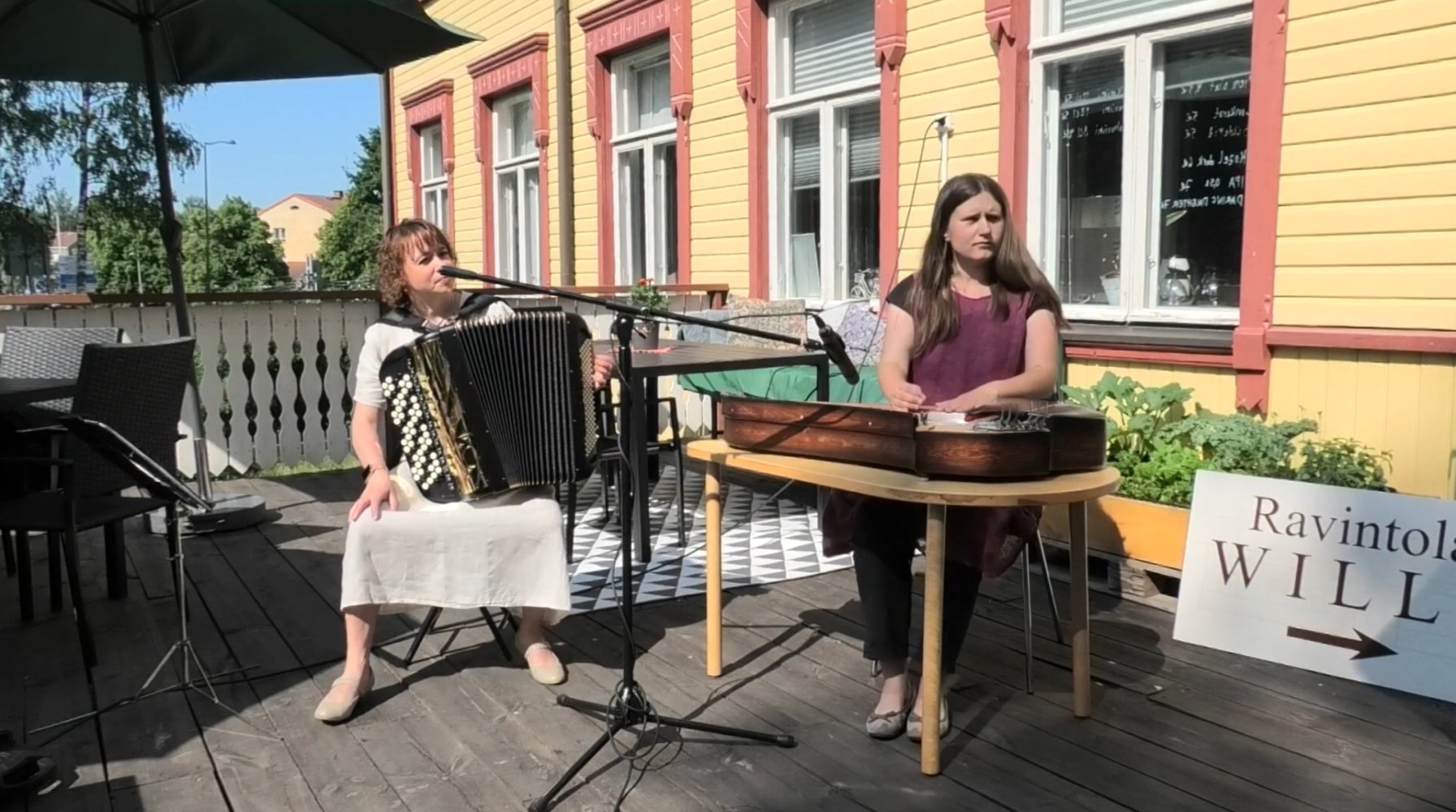
Happy Eino Leino and Finnish Literature Day to everyone!
I am a former St. Petersburger and Finland fan who moved to the country of my dreams. My heart beats for music, literature, and local culture. I experience the happiest moments of my life when I play the Central Finland kantele to foreigners. I raise the instrument high and say that this exists only in Central Finland, nowhere else in the world. That is why I was so excited when I heard that Äänekoski has its own "national author," Juho Hoikkanen.
According to Timo Enäkoski, "as late as the 1970s he was a celebrated local author, but now at least among those who have moved to the area he is completely forgotten." Few know whose name Hoikkassali, located in the basement of Äänekoski Library, bears. Fortunately, gaps in one’s education can be easily filled. Writings by Timo Enäkoski about Hoikkanen have been published in, among others, Pässinrata and ÄKS magazines. They have covered Hoikkanen’s work as a folk school teacher and his rise to become a writer. Hoikkanen was particular that he be addressed by the latter title, even though he had done distinguished work as a teacher and even oversaw the construction of Koivisto’s first school.
During last year’s Koivisto Week it was decided to showcase Hoikkanen’s works prominently. The early stages of Äänekoski’s factories and the novel Vangittu laulu, based on the story of Kalle Piilonen, have been brought to the stage as a live radio play. Vanhan Äänekosken kotiseutuyhdistys and Koiviston kyläyhdistys made this production possible. The scriptwriter and director Pilvi Honka has aimed to be as faithful as possible to the events and language of Hoikkanen’s novel. The story has two parallel plotlines. One is the competition between the industrialist Suurkoski (Kari Taipale) and Mrs. Salmi (Jaana Tani) over the Huutavankoski factory project. The other is the "Romeo and Juliet love" of their children Alma (Elli Harju) and Lennart (Kasper Colliander), kept secret from their parents. In flashbacks we see Suurkoski’s nightmares; a poor orphan child, played by my daughter, haunts the industrialist there. That haunting sparked the idea to also join the school drama club. Ghosts, prophecies, and folk mysticism were important themes for Hoikkanen; they appear in his other stories too, such as his first success Tuonen ahventa onkimassa.
In Hoikkanen’s view, Kalle Piilonen was not an admirable figure; his rapid rise to industrialist was suspicious, and "imprisoning the song of the rapids" even unnatural. That is why Vangittu laulu is not a hero story. The mood is lightened by more comical characters, such as the gossiping Long Loviisa (Outi Pantsar) and Suurkoski’s errand boy Paatela (Miika Vaarakallio), who clumsily tries to make an impression on Alma. A radio play is a fitting form for Hoikkanen’s works, as dialogue was the most important thing in his novels.
I was responsible for designing the music for the production. The instrument chosen was the concert kantele. At the beginning, a traditional Central Finnish piece that would take us "back in time" was requested. Akseli Mäkelä’s Syyslilja suited that well. Merikanto’s song Soi vienosti murheeni soitto has great significance in the play; it sets the mood at the start of the performance. The "nightmare music" was also chosen carefully: Leonid Bashmakov’s Lento, which especially in the early stages cost blood and tears and was nerve‑wracking at the kantele examination. When I got to "recycle" it as industrialist Suurkoski’s nightmare, I felt that justice had prevailed.
The Vangittu laulu radio play can be watched in full on YouTube. It has not been re-staged so far, but there is theater expertise of many kinds in Äänekoski, and members of the team can be seen in various productions. Pilvi Honka’s Varjolapset. You can admire Kari Taipale’s charisma this autumn when the Muistokirjoitus monologue is performed at Painotalo, with a new premiere on 15 Aug at Painotalo (script Teppo Seppänen, direction Pilvi Honka) — a tip for theater lovers. After all, Muistikirjoitus is a completely Äänekoski production; local culture is not some relic of the past. It is born here and now.
Sources: Äänekosken Kaupunkisanomat
Pässinrata, 1/2018 Juho Hoikkanen, writer (written by Timo Enäkoski)
Äänekosken teatteri
Author Olga Kolari