
The Phases of Wanhan Asema
Keitele-Museo |


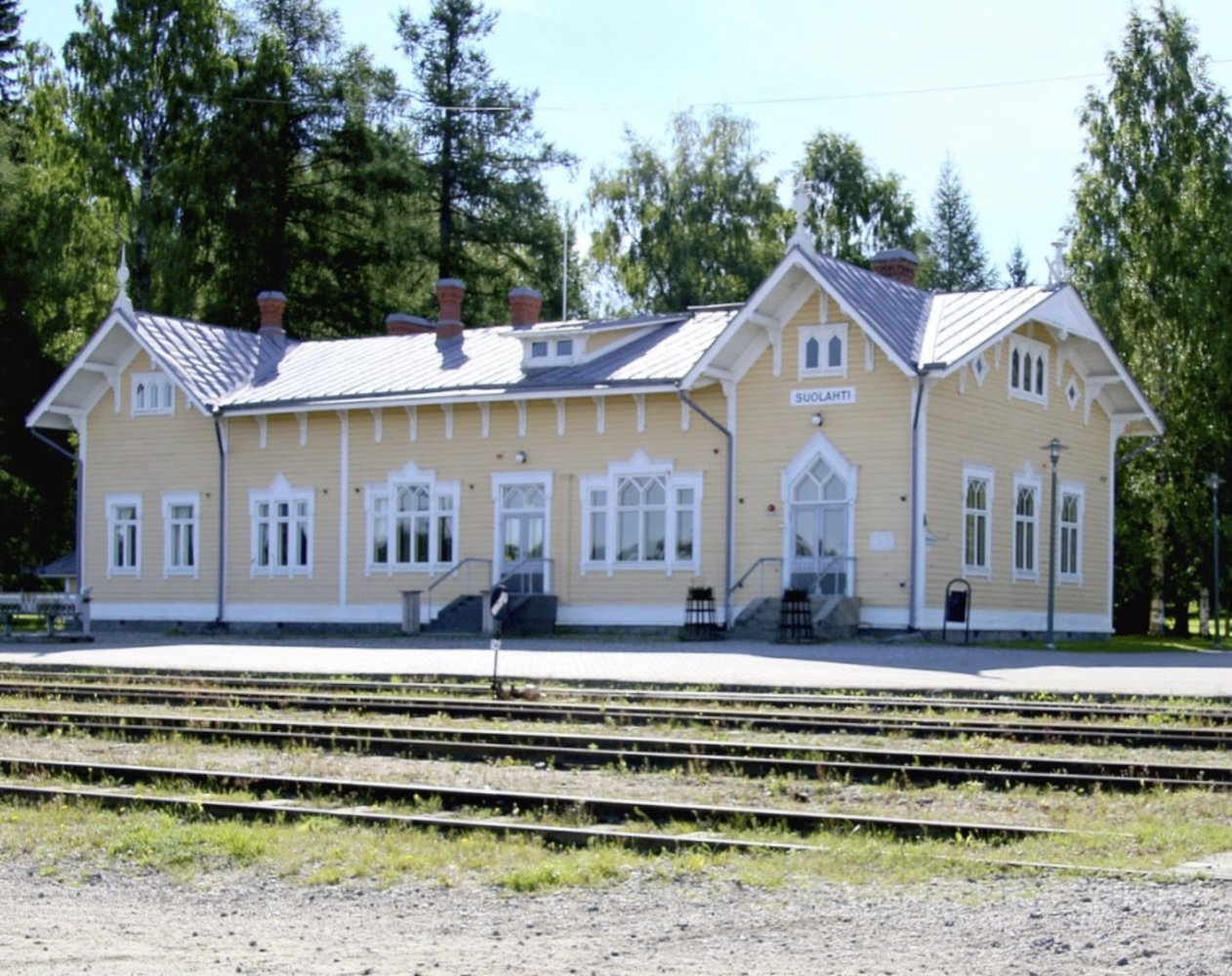
Suolahden Wanha Asema and its surroundings are a historically significant area. There, water, road, and rail meet. In recent years, Wanha Asema has hosted events, various art exhibitions, and performances by different artists. A restaurant has also operated in the station building. However, the history of Wanha Asema is somewhat unfamiliar to many. But not for long! (header photo: Terho Poikolainen)
The station, now over a hundred years old, began to be planned when, in 1894, a decision was made to build a railway to Suolahti. Kalle Piilonen from Äänekoski played a major role in the rail project. The station was taken into use when the section between Suolahti and Jyväskylä was completed in 1898. Just a year later, a narrower railway known as the 'pässinrata' was completed between Suolahti and Äänekoski. Since then, the pässinrata has been replaced by a broad-gauge connection. The station building completed in 1898 was designed by Bruno Granholm, who at the time served as the chief architect of the Railway Administration. Granholm also designed the other stations on that line, of which the station buildings in Suolahti, Laukaa, and Jyväskylä have survived to the present day.
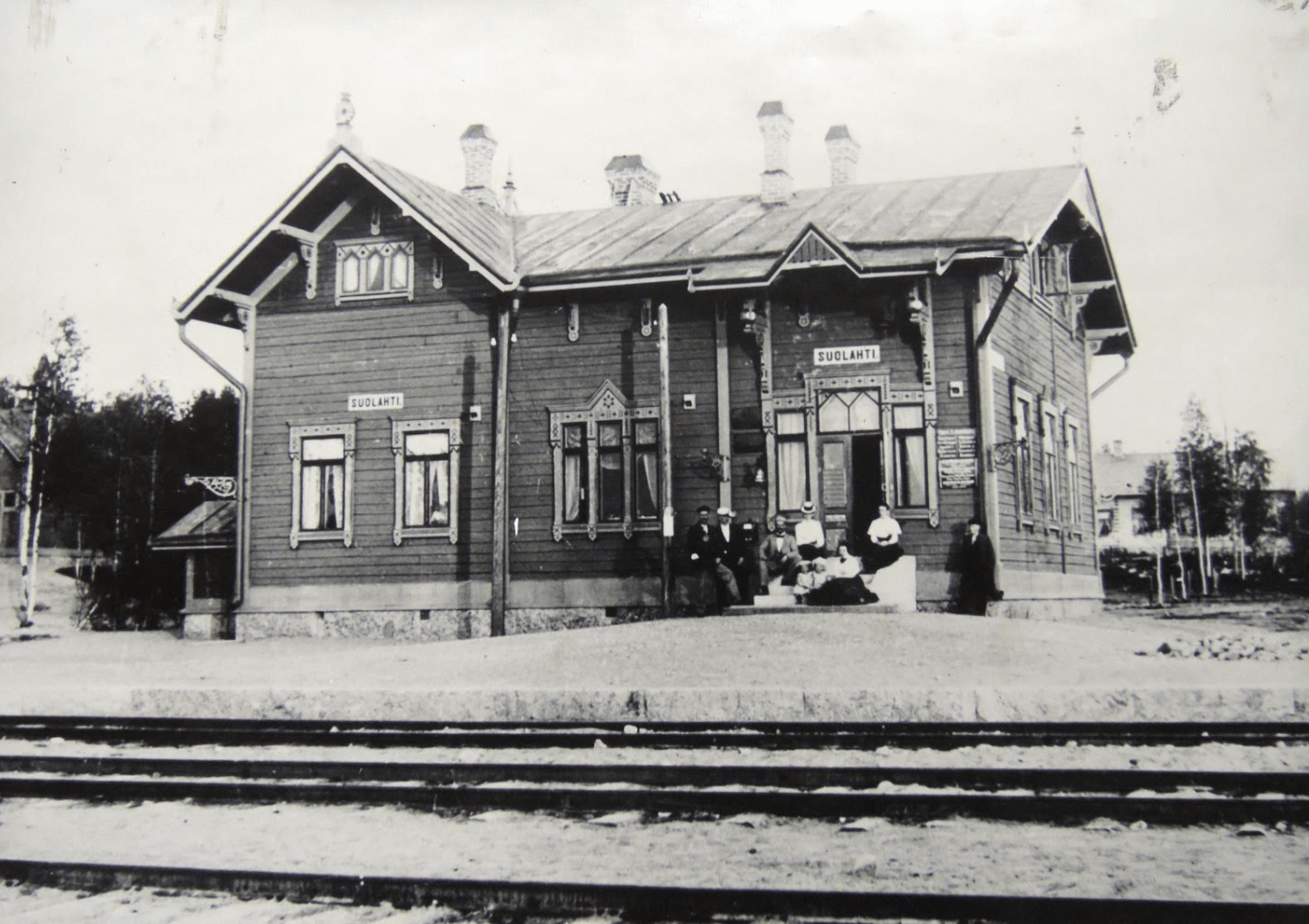
This is how Suolahden Wanha Asema looked when it was completed in 1898. (Photo: Väksyn arkisto)
The first stationmaster at Suolahti station, from 1898-1925, was Rudolf Ahonius, who lived with his family in the station building. Wanha Asema's station building was expanded in 1904, giving it its present form. That same year, regular passenger and freight traffic began on the narrow-gauge line between Suolahti and Äänekoski. For decades, Suolahti station was northern Central Finland's most important hub for waterborne and rail traffic. There, passengers and goods transferred from boat to train and vice versa. The station was also a center for prisoner transports and at that time had a holding cell. A post office also operated at the station.
In the early 1900s, Akseli Gallen-Kallela spent time in Äänekoski. He was a good friend of Suolahti's then stationmaster, Rudolf Ahonius. Gallen-Kallela visited Äänekoski twice, first in Konginkangas in 1904 and then in Suolahti in 1906. It is said he came to Suolahti because he had sheltered Russian revolutionaries and therefore feared for his life. Gallen-Kallela stayed at the Kirppula house, from which he is said to have skied almost daily to Wanha Asema to greet the stationmaster. Wanha Asema is said to have had a secret room where Ahonius could, if needed, have hidden his friend. In addition to Gallen-Kallela, Ahonius knew many other cultural figures of his time, such as Juhani Aho and Yrjö Blomstedt.
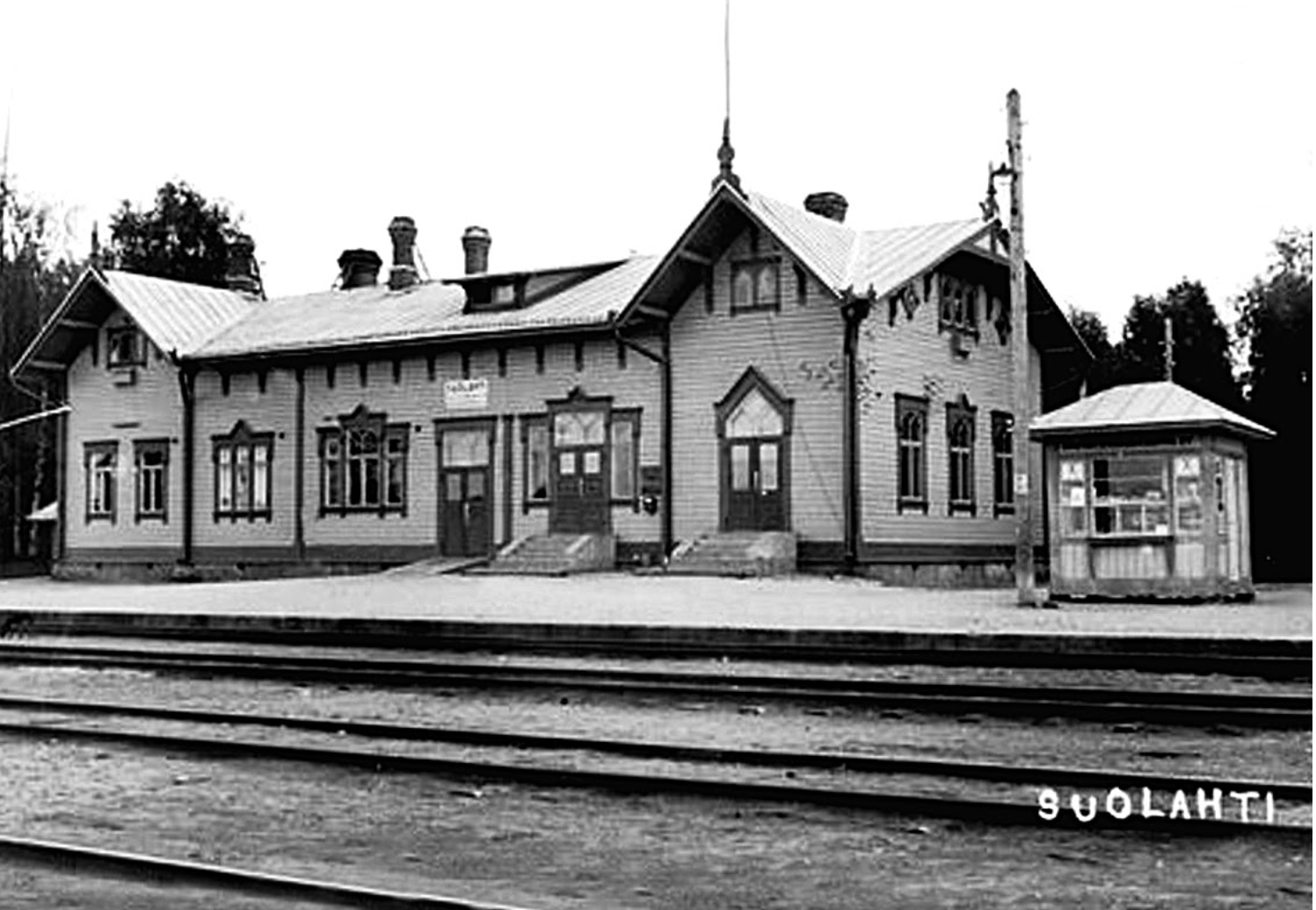
Wanha Asema after the expansion. The station building's yard once also had the kiosk shown in the picture. (Photo: Terho Poikolainen)
Men left Wanha Asema for three wars, and there they also returned from war. It was also a hub for evacuation transports, and some evacuees from Karelia settled in Suolahti. From Karelia, Elisenvaaran yhteiskoulu was also evacuated, which led to the founding of Suolahden yhteiskoulu in 1948.
In addition to the evacuees, industrial workers played a key role in Suolahti's settlement, who made up the village's population. Suolahti arose precisely thanks to industry, and it has had, and still has, a strong working-class culture. The railway built to Suolahti played a significant part in Suolahti's growth. Without it, Suolahti and its surrounding areas would not have become nearly as large and significant as they once were.
Wanha Asema's busiest period was in the 1920s-1930s. The station was retired from active use in 1951 when the new station was completed. From 1952, the station was used for railway workers' leisure activities. During the Rautakanava period in 1964-1993, the station building served as a social space for locomotive drivers and other railway workers. Since then, the station building has fallen quiet.
Suolahden Wanha Asema has been included in Museovirasto's station area protection agreement since 1999. Later, the station has been used by both artists and restaurateurs. At the moment, however, it stands empty, but new uses have been planned for it.